
How to Avoid Analysis Paralysis in Marketing (Without Shipping Junk)
Analysis paralysis is a planning habit that stopped paying
Planning is imagination with a purpose. You run the campaign in your head first so you find the broken parts before you spend money on them. That works right up until it doesn't stop.
You have seen where it ends. The rebrand that has been in "discovery" for five months. The offer that gets rewritten every week and never gets published. The funnel diagram with forty boxes and zero traffic.
Visualization has no natural stopping point. There is always one more scenario, one more objection, one more competitor to study. The mind will happily keep going forever because it feels like work and it carries no risk.
So the question is not "should I plan." It is: how much planning is actually earning its keep, and when do I stop.
What useful planning looks like in a campaign
Most marketers say they "plan." What they mean is they wrote down a channel and a budget. That is not the same thing.
Done properly, you walk the entire path a stranger takes. Ad. Click. Page. Form. Email. Call. Sale. At every step you ask: what breaks here?
Example: a webinar replay funnel
Two things that cost nothing to catch in your head and a lot to catch after launch.
One. Autoplaying replay videos start muted in browsers. If you never picture a real person landing on that page, you never think about it. They land, the video is playing, no sound, they assume it is broken, they leave. The fix is a blinking "unmute" badge over the player. Small. Ugly. Necessary.
Two. The offer CTA usually gets placed after the video ends. Picture the actual viewer, not the ideal one. Plenty are half-watching. Some already know they want it at minute nine. Put the CTA directly below the player, not only at the end, and those people can convert without watching to completion.
Neither is a genius insight. They come from sitting down and imagining a real human using the thing before you build it.
Then imagine the objections
Same exercise on the offer. Before you write the page, list every reason someone says no. Price. Timing. "We already have someone doing this." "I don't believe the number." Then write the page against that list.
If you can't write ten objections from memory, you don't know the buyer well enough to be spending money on traffic yet.
That is roughly an hour of work. Past that hour, you are guessing about guesses.
The other approach: build the plane as you fly it
The opposite move is to sell first and build after. Launch the offer, and when it takes off, create the rest of the modules and the rest of the marketing.
That order scares people. But it solves the exact problem planning creates. There is nothing left to theorize about, because you have real buyers and real feedback.
The market corrects you faster than your imagination does. You can list objections for a week, or you can put up the offer, take three sales calls, and hear the actual objections in ninety minutes.
Imagination gives you a guess. Action gives you data. The trade is that action costs something — money, reputation, cleanup — and imagination is free.
Where shipping fast gets expensive
It is not free, and I want to be honest about that.
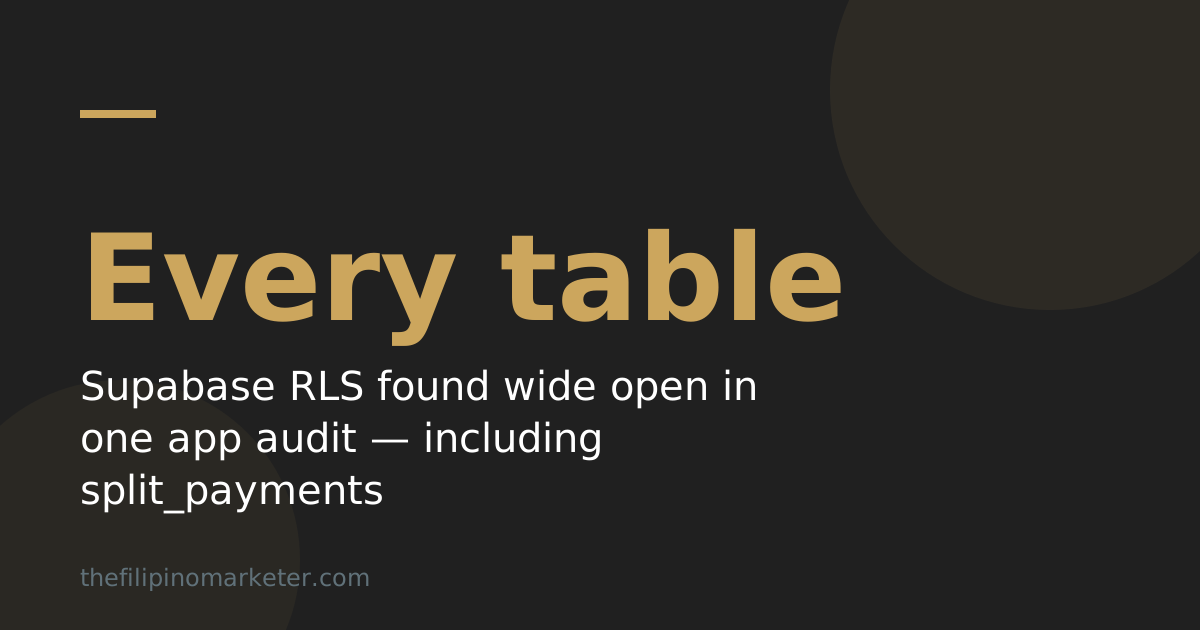
We audited an app that had been built exactly this way — fast, live, iterating. Supabase row level security was wide open on every table, including a split_payments table. Owner-only CRM tools were rendering on a public page with no auth check. Anyone with the URL had them.
The fix was Supabase Auth plus a locked-down RLS migration. Not complicated. But it was work that should have happened before the thing was public, and it only got found because someone finally sat down and thought the whole system through.
The marketing version of that is the same shape. Launch fast, fine. But if the checkout charges the wrong amount, or the lead form silently drops submissions, no amount of iterating fixes the money you already lost. Some parts are not optional at takeoff.
The middle path: planning with a deadline attached
The way out is to make the thinking cheap and fast, then hand it to someone who gives you a verdict.
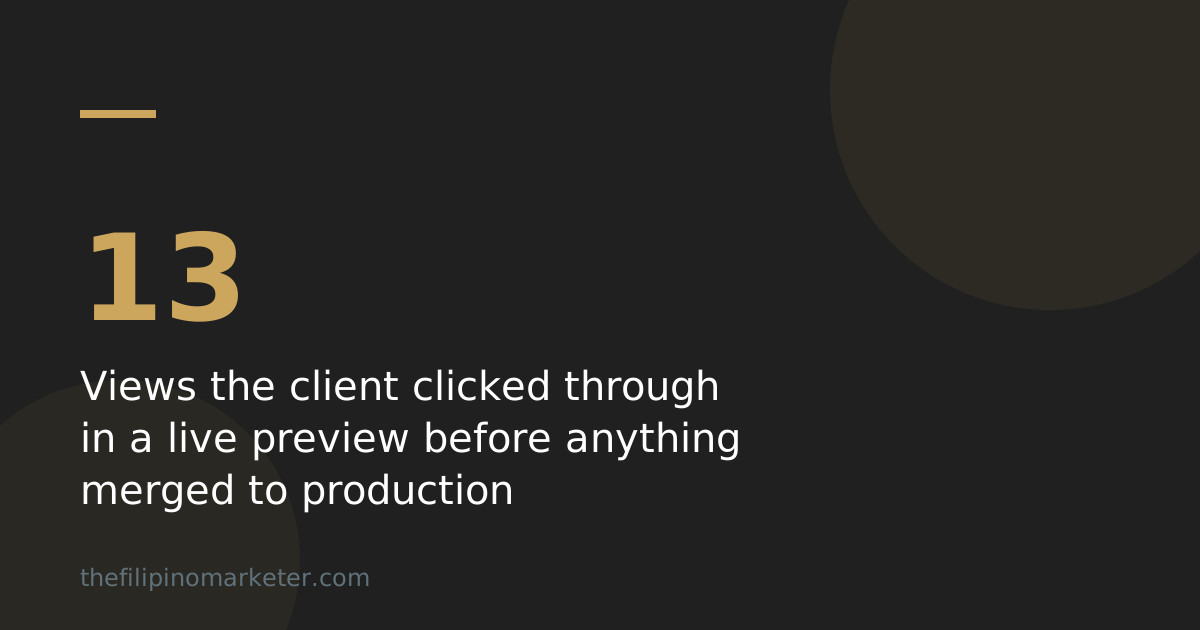
On a UI rebuild, instead of debating designs in a doc, we shipped the work as a GitHub PR with a live preview link. The client clicked through 13 views and approved before anything merged to production. That is not a mockup and not a guess. It is the real thing, running, on a URL, that someone can say yes or no to.
Same principle outside of code. Instead of planning the funnel for three weeks, build the ugly version, put it in front of five people who match the buyer, and let their reaction end the debate.
What makes it work
- Set a review point, not a finish line. The goal is a decision, not a finished asset.
- Make it clickable. Opinions on a static picture are worthless. Opinions on something you can click are not.
- Batch the feedback. One pass through 13 views beats 13 separate conversations.
- Automate the boring parts so the loop stays cheap. Our deploy previews run non-interactively — repo linking, env syncing, custom domains — so putting a new version in front of someone takes minutes, not a meeting.
That last one matters more than it sounds. Most analysis paralysis is really a cost problem. When shipping is slow and expensive, you overthink, because you only get one shot. When shipping is cheap, you stop overthinking, because you can just look.
So which problem do you have
Choosing depends on which way you already lean, and it is backwards from what most people expect. You do not double down on your strength. You apply the correction you need.
The person who ships too fast needs to slow down and imagine what breaks. The person who plans forever needs a deadline and a live URL.
A quick way to tell
- Look at your last three projects. Did they go live late, or did they go live broken?
- Late means you need forcing functions. Pick a launch date. Sell before you build. Ship the ugly version.
- Broken means you need one hour of walking the user path before every launch. List the failure points. Check payments and auth specifically.
Most people already know their answer. They just don't like it.
If you want a second set of eyes
If you are somewhere in the middle of this — a funnel half-planned, an app half-shipped, a campaign you keep rewriting — a short conversation usually sorts out which of the two problems you actually have. You can book a time here if it's useful. No pressure either way.

